
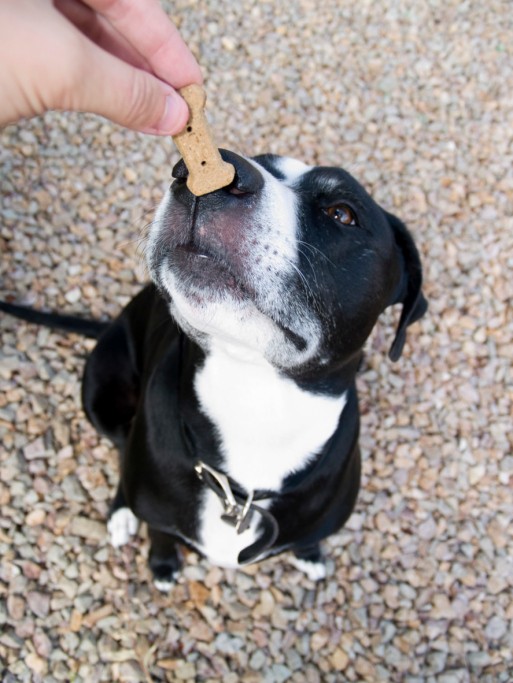
 Treats are affordable and fun way to show your pets you love them. Also, when you train the dog, treats are the way to reinforce learned behaviour and to reward positive behavior. There are many different treats you can buy for your pet and supplies to help you make your four-legged family member’s life happier and healthier. But, among many of these product, how to choose the right one? We’ll try to help.
First of all, there are several factors you should consider. What is the intended use of treats? If you plan to use them while training your dog, opt for smaller treats: quickly to consume and not too distracting from the training tasks. Smaller treats, commonly lower-calorie products, are also more recommended if you would like to feed treats to your furry companion often, because dogs should also stay slim. Consider the medical conditions and the age of your dog. For example, if your puppy suffer from an allergy, give it hypoallergenic treats. Soft treats are recommended for seniors, because they have more sensitive teeth, while a puppy would prefer a small treat. Keep in mind that pets have their own personality and preferences. Treats come in many sizes, shapes and flavors, so find those that will fit your pet’s unique tastes. Treats are sometimes good way to avoid issues related to feeding table scraps: picky eating, gaining weight, malnutrition, digestive problems, begging etc. Anyhow, make sure treats constitute less than 10% of your pet’s diet.
When you buy food and treats for your family, you surely follow common-sense rules. You should do the same when choosing treats for your dog. Manufactured treats are healthier alternative than leftovers and scraps, because in most cases they are formulated in order to complement main meals , be delicious and to improve digestive and/or dental health. Check out the list of ingredients. If there are ingredients you have never heard of, reconsider your choice. Of course, keep in mind that our palate is different than dogs’. Your furry family member would die for beef trachea, while you would definitely skip it and opt for filet mignon.
In general, there are four types of treats: rewards, biscuits, chews and healthy treats. Rewards are treats formulated to reward your dog’s good behaviour and, during training, to provide positive reinforcement. Rewards are usually meat-based and smaller. Biscuits can be used as a snack or to add crunch to canned dog food. These treats are helpful in cleaning your dog’s teeth. Chews are used to strengthen dogs’ teeth and to keep them occupied with something more delicious than your shoes or furniture. Health treats are carefully formulated to improve your dog general health and they can contain vitamins, minerals and omega 6 fatty acids to promote healthy body systems, coat and skin.
Treats are wonderful way to train dogs and to strengthen the bond between an owner and the pet. However, it should not be overdone.