
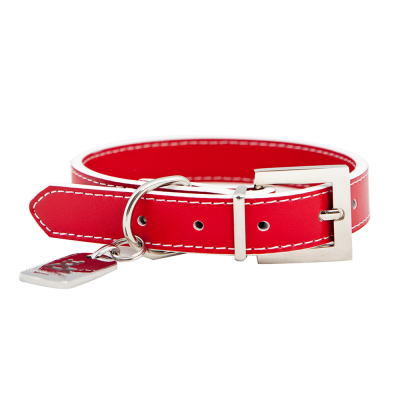
 A collar and lead are two of the most essential tools you should have as a pet parent. Also, in most places, they are compulsory by law when you take your dog out. However, with so many types of collars and leads for dogs on the market, which one will you choose? Here are some tips.
First we better consider the various types of collars. You should choose one according to the size and temperament of your dog and your requirements for training. For most dogs, a traditional leather or nylon collar is enough. For specific conditions, there are other collars too.
Traditional Collars: These come in various styles, widths and colors. It should fit high on your dog’s neck and not loose so as to slip down towards her/his shoulders. Before buying, take accurate measurement around your dog’s neck and add 2-3 inches.
You should be able to slip in your two fingers after you fit the collar around your pet’s neck. That way it is snug and not loose so as to slide out from her/his head. Loose collars not only pose the risk of losing a pet, but also carry a danger of snagging on objects which can cause an accidental death of the pet. Collars must also not be tight to the extent of restricting her/his breath or causing coughing. You should always keep a watch on the collar size if you have growing puppies.
Check the width and hardware of the collar which should match the size of the dog. Lightweight and small-sized collars are good for puppies and small dogs, while for large-sized, stronger dogs, wider and more durable collars are perfect.
The collar should have the tag with the current name of the dog.
Halter-type Collars: A halter-type collar gives you the best control of the dog, because it gives you control of the head of the dog. It resembles much with a horse’s halter with one band around the nose and one around the back of the head. The leash is positioned under the chin. So, when you pull it, the dog‘s head is pulled and so, s/he cannot pull you forward.
Chain-slip Collars: These are also known as Choke Collars or Check Chains and are useful for training and retraining if used appropriately and on correct dogs. These are used mostly for dogs that pull when on a leash, are stubborn or don’t respond to training while wearing traditional collars. Take a trainer’s tips on how to use it.
Pronged Collars: These are also known as Pinch Collars and consist of blunt prongs that jut inward from links. They are used only for the most obstinate pullers or as temporary training tools. However, halter-type collars are better than these because they cause less harm to your dog.
All dog parents should have a 6-foot lead that matches the collar. This is essential for training and control. The best leads are the retractable ones because they allow freedom up to 26 feet with which dogs can roam around and check smells, and still the parent can keep control over them. It has an easy, push-button control that enables you to extend distance, rewind slack and lock perfect length in place.
Petcare.com.au have a variety of pet products including various types of dog collars and leads. Take a look at their range of products on their website.